


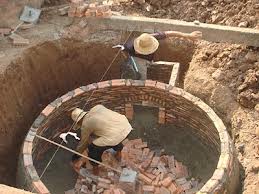

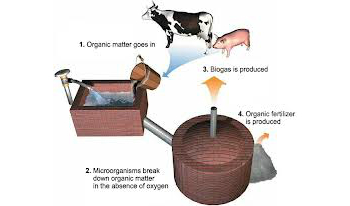
The bio-digester will have an input area for manure and other organic materials, a sealed chamber which facilitates the anaerobic process, and an output area for effluent that has passed through the bio-digester. From the sealed chamber Biogas will be pressure fed into holding tanks for use. The effluent can be further composted and used on the gardens.
Advantages of bio-digesters:
- Reduces organic content of waste materials by 30-50% and produces a stabilised liquid effluent.
- Provides a sanitary way for disposal and/or processing of human and animal wastes.
- Produces a large amount of methane gas which can be stored at ambient temperature.
- Produces free flowing, almost clear liquid odourless effluent, which can be added to compost or used as fertiliser.
- Weed seeds are destroyed and pathogens are either destroyed or greatly reduced in number.
- Rodents and flies are not attracted to the end product of the process. Access of pests and vermin to wastes is limited.
- Closed cycle process which eliminates the need for external energy sources.
It is important that proper operating conditions are maintained in the digester for optimum gas production and that the effluent is handled correctly to eliminate potential water pollution problems.

Even though developing countries are increasingly supporting the building of bio-digesters, they remain rare in developed countries. There are some smaller ones available for sale, or you can find plans to build a small one yourself, for urban situations. The principles remain the same as for larger ones. If you are someone who would like to learn by actually making one, PRI Sunshine Coast is building a bio-digester this year, spread over 3 courses:
Week 1 – Mon 18 – Fri 22 March 2013: Planning and design of the bio-digester, putting in footings
Week 2 – Mon 27 – Fri 31 May 2013: Pouring the cement floor and building the double brick walls, building the inlet and outlet
Week 3 – Mon 26 – Fri 30 August 2013: Finishing the building and connecting the outlets, testing connections
You can do one of the courses or do them all, investment is $795 for a one week course, which includes camping accommodation (byo tent) and all meals. Come and join us for this exciting project and learn to make Biogas! Courses are capped at 15 students. Click here for links to online booking pages.

References: Guyana Energy Agency: Bio-Digester information and construction manual for small farmers; The National Bio-Digester programme in Cambodia


Author: Permeco Inc.
Not for profit organisation and charity based in Queensland, Australia, focusing on permaculture education and environmental research. Please note that all articles and recipes written under this label on this website prior to 2025 are written and copyrighted by Willa Sevenstern (previously known as Zaia Kendall).